Manoj Gupta • Rishihood University
Manoj Gupta • Rishihood University
Understanding India and Cultural Entrepreneurship
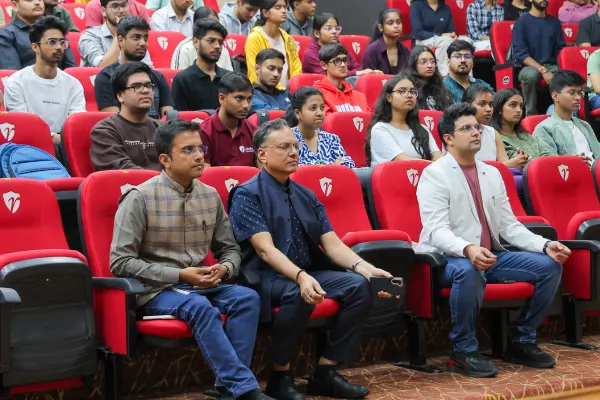
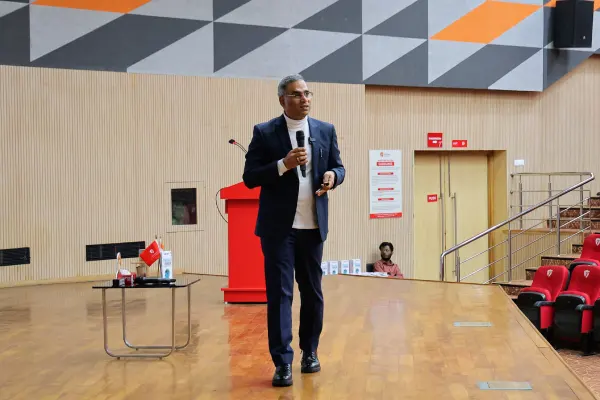
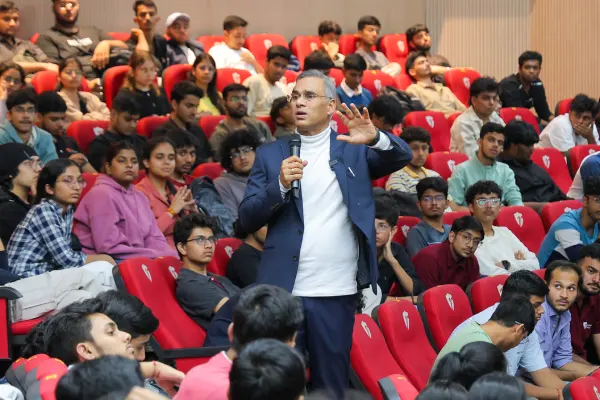
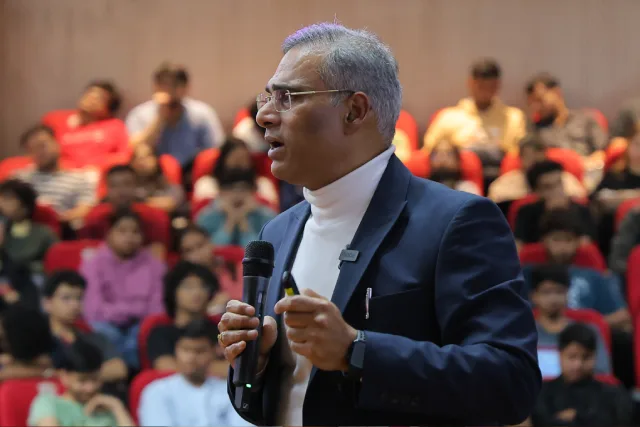
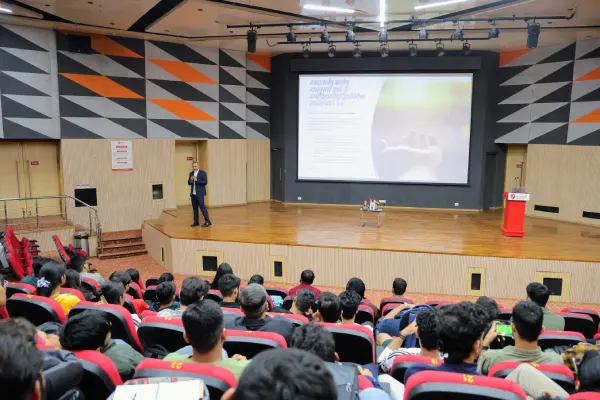
A reflective session where Manoj Gupta shared deep insights on cultural entrepreneurship, purpose-led growth, and the mindset young leaders need for the future.
Invite Manoj as a SpeakerKey Points Discussed
✔
Ancient wisdom and its relevance in today’s business world
✔
Leadership multiplier mindset — expanding impact beyond role
✔
Mastery over attachment & aversion (rāga–dveṣa) from Gita 2.64
✔
Self-control and inner clarity while navigating modern work life
✔
Job, link & system responsibility — the 3 layers of leadership
✔
Non-negotiable parameters: economic viability and long-term growth
✔
Short-term profits vs long-term impact — how leaders balance both
✔
People connected through systems energise money and delivery cycles
✔
How sub-optimal roles create organisational waste
✔
Waste → lower quality, higher cost, increased cycle time
✔
India’s service sector as a global opportunity landscape
✔
India’s youth power — population under 35 as a multiplier asset
✔
India’s GDP & wallet share rising faster than global benchmarks
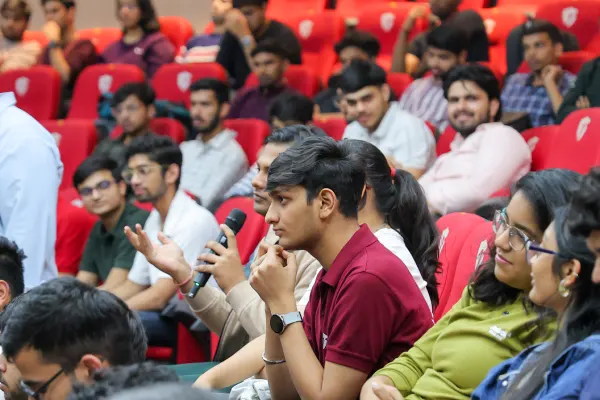
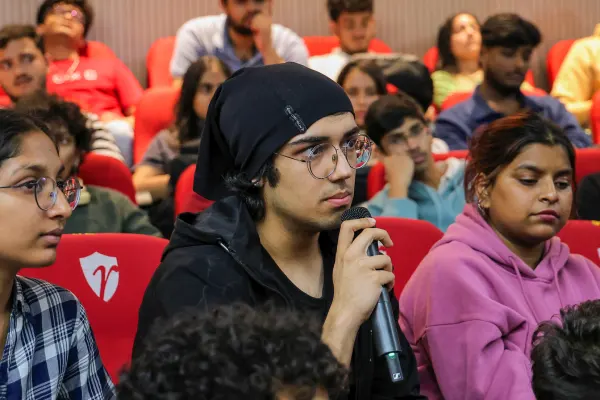
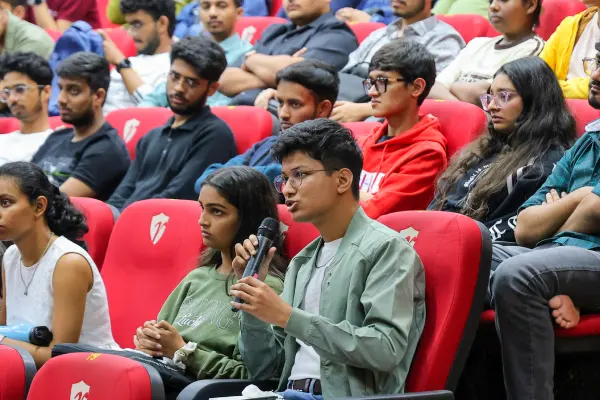
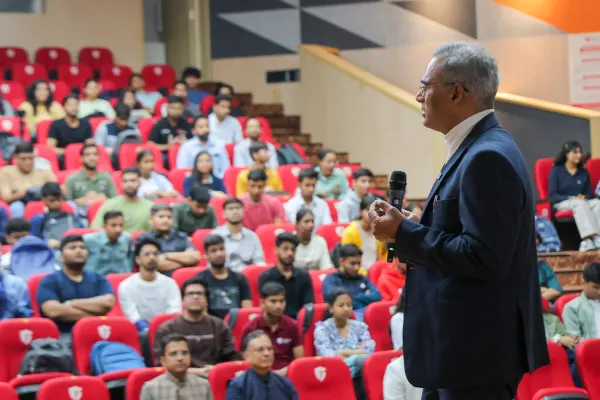
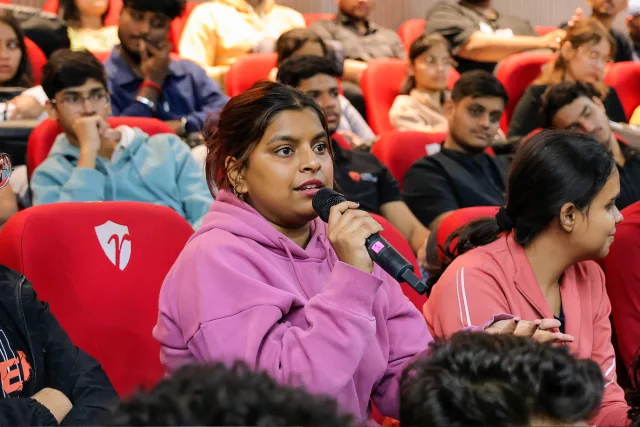
Audience Interaction
Manoj explained that material growth gives resources, but spiritual clarity gives direction. When the mind is stable, wealth becomes a tool for impact rather than stress, creating a balanced life of purpose and prosperity.
No — spirituality strengthens ambition by removing insecurity and confusion. When actions come from awareness instead of ego, both material progress and inner peace grow together, leading to conscious and sustainable success.
It teaches that a leader must act without attachment or aversion. One who stays centered while engaging with the world gains clarity, stability, and effectiveness.
Attachment clouds judgment, aversion creates resistance. Leaders who rise above both take clean, conscious, long-term decisions.
A leader multiplies impact by aligning job responsibility, link responsibility, and system responsibility — not just performing tasks but enabling others.
Because any model lacking economic discipline collapses. Sustainable leadership means balancing today’s profits with future scalability.
When roles are not taken optimally — unclear responsibilities, weak systems, or inefficiencies — waste accumulates as higher cost, lower quality, and longer delivery time.
Strong systems reduce ambiguity, align teams, speed up delivery, and increase financial efficiency — creating an energized growth cycle.
They face survival threats: lost opportunities, inconsistent quality, rising costs, and long cycle times.
India has 2.7× more people under 35 than the US, UK, and Europe combined — a massive workforce and innovation engine.
Because IT, banking, retail, and insurance form the largest part of India’s economy, creating unmatched potential for conscious entrepreneurship.
Short-term profits are important but not at the cost of long-term growth. Conscious leaders balance profit, people, and systems.
Ancient wisdom emphasizes clarity, self-mastery, and long-term thinking. When applied to business, it reduces reactive decisions, strengthens leadership stability, and improves strategic execution.
Purpose-driven leadership keeps teams aligned and motivated even during uncertainty. It creates a culture of trust, reduces attrition, and improves innovation — key ingredients for business growth.
Conscious leadership focuses on clarity, ethics, and strong systems. Instead of reacting to competitors' shortcuts or bribery, leaders focus on value, trust, and long-term brand credibility.